One-way ticket to Iran.

So this article was started quite a few weeks ago, conceived as a light-hearted perspective on what a person hoping to study in Iran is really thinking. A person travelling to Iran for the second or third time already knows that Iran is in fact one of the SAFEST places in the world to go, especially as a woman.

I had already started to sell and give away all my belongings (my children however are not quite as keen to part with all their “stuff”…) In fact, there are many open spaces opening up in the house around me, with so much gone, almost a reflection of how a mind too can be opened up when it dispenses with everything that is superfluous.

I started travelling between Iran and Perth in September last year, the first time on a 3 week ziarat visa, the second visit this year a week after the massive blanket of snow descended on Tehran and its airport.

So I arrived, catching up with friends I had made during my first visit, spending time at the Institutes I do videos for, and for which I write articles, and also building a small snowman in the mountains behind Darband. I was also in Iran to try to apply for Howza, the seminary style colleges in the centre of Islamic learning, Qom. Howza  is both traditional and groundbreaking; some of the Islamic world’s great clerics and thinkers teach here, were educated here, or pass through on the speaking circuit. Alhamdulillah, I was given an interview, and now upon my return learned that I have been accepted.

Why a one-way ticket to Iran? Admittedly, it sounds better, does it not, and as I am now still in the process of organising the visa, sadly booking a ticket is not even conceivable yet! Yet it has a deeper meaning, realising that Allah is the One Who pulls the strings here.

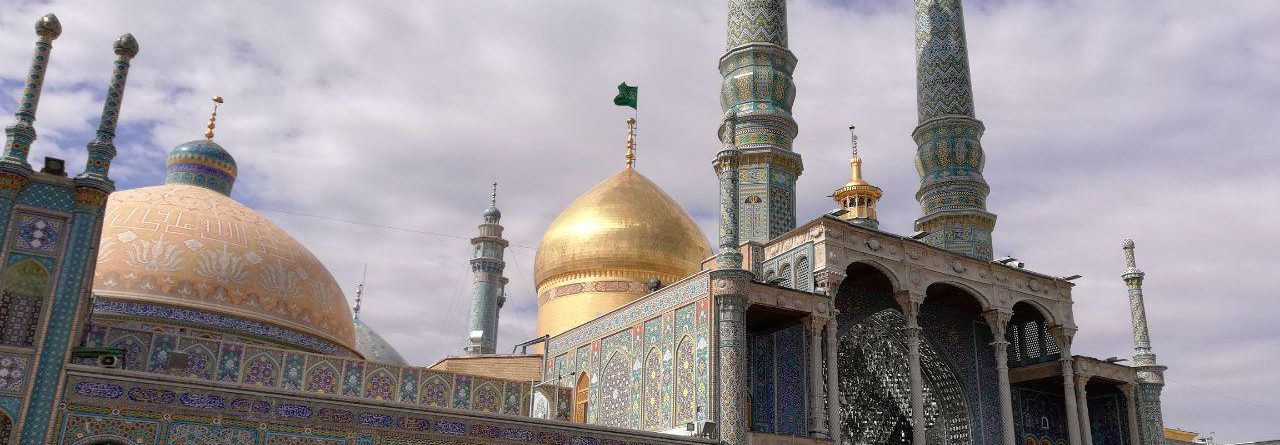
Having spent 4 weeks each in Qom and Tehran, 2 weeks in Isfahan, and a short stay in Mashhad to visit Imam Reza Shrine, a longer-term move to Iran is not so daunting. The only daunting aspect could be trying to manoeuvre through Perth immigration if my children ill-advisedly decide to stay in Western Australia. Perth immigration likes no-one, not white Christian women, not the elderly, and most certainly not Muslim females returning from Iran.

On the upside, the positives I will reap while living in West Asia are these;

1. Becoming fluent in Farsi and Arabic, in the not completely distant future (?)

2. Having access to some of the best scholars and teachers in the Islamic world

3. Being surrounded by like-minded students (?)

4. Being able to visit my Islamic brothers and sisters in Iran much more easily

5. Taking advantage of easy and cheap travel (especially bus) to see much more of Iran

6. Visiting a Holy Shrine every single day, if I want to

7. Enjoying the relatively low-cost lifestyle of cheap food and low rents

8. Adding to my sizeable collection of headscarves

9. Being able to afford alterations so I can have my usually far too long chadors taken up

10. Taking part in the shouting of “Allahu Akbar” across the rooftops every year on the Eve of the anniversary of the Islamic Revolution

11. Perfecting the art of how to dodge the true lethal weapons in Iran: Qom drivers

12. Endless opportunities to eat my way through the range of Iranian chocolate manufacturers

13. Time to explore the best parks for women to run in

14. Building more snowmen?

15. Contributing my skills to a nation that is non-imperialist

16. Being at a very healthy distance from Perth immigration officers

17. Learning, learning, learning, every single day!


Prayer for the regretful beseecher

Bismillah al Rahman al Raheem

I beseech you Most Gracious God in Your infinite mercy and compassion

The lips of my mouth cannot phrase a word that is worthy of reaching up to Your majesty

The utterances of my heart find no expression in a language that conveys their meaning

The letters in my fingers do not come together to sing You the praise that You deserve

So I turn to You with all my soul and mind in the hope that I can be humble enough, grateful enough to be deserving of approaching You in this manner

You Who have no equal. You Who hold all of creation. You Who cannot be conceived of by us in our finite knowledge. You Who turn on the stars. You Who crash the ocean. You Who have always been and have no partner. You Who light our hearts. You Who never turn us away. You Who turn us to You. You Who will pick us up even when we have fallen deep. You Who send us joy and blesssings even when we do not ask of You. You Who show us to our sins with the love of a Forgiver.

Do not spare me of the hardships which You distribute in your wisdom. Do not leave in my life what does not serve You. Give me as little as You see fit, and it will be enough to be a bounty for the rest of my life.

Every breath in my chest is drawn for Your pleasure. Every skill You allocated to me is useful only for Your purpose. All provisions in this world are awarded from Your generosity. Every person in my life is sent at your goodwill and with Your understanding.

Most Merciful One, You Who hear me even when I do not speak. Most Patient One, You Who do not forsake me even when I have forsaken myself. You Who are close to me even when all else is afar. You Who trust me even when I must disappoint.

I beseech You to accept the little I can give You. Cover my sins with Your All-Knowing, All-Seeing wisdom. Extend my days by such a number as I can continue to serve You humbly. Guide me with Your light when I have extinguished my light from my own cares. Take from me all You have allocated to me and which I do not deserve. Give to me that which You have destined for me.


What happens after you have converted to Islam?

This again is a personal reflection on some of the many ways in which Islam will rightfully start to change your life. It is told from the perspective of a European woman, so some issues may not apply to other converts (reverts).

For a woman, often the first and most obvious change is the wearing of hijab. This is prescribed in the Qur’an, although not all female reverts or women who are born into Islam do wear hijab. For the revert who does want to obey this rule of Allah, she will of course start to encounter a plethora of reactions to being a “flag bearer” of Islam. It will range from a gaze, to a stare, to people no longer talking to you, crossing to the other side of the road, “running away” from you (!), to various silly and islamophobic comments. In rare cases, there is of course the possibility of physical abuse or assault, depending on your country/city of residence. Alhamdulillah, I have experienced no physical abuse to date, but being stared at by a sea of white faces (I am white) at the departure lounge in Doha, waiting for the flight to Perth, being the only hijabi at the gate, is almost enough to send me straight back to Iran…

The other obvious change is the relationship with “friends”. Some friends might be very curious to hear about your conversion, and that could bring about a more profound relationship with them. Others may find it very difficult, because they have so many prejudices about Islam. Being patient could be one response; my own experience has been that I find it very difficult to be around negative, cynical people, as they seem to try to cloak their surroundings in the same negativity. Inshallah, I will become more patient with these people though, as they need the support of believers too. My relationships with certain friends/families came unstuck on the issue of alcohol: sadly, some people are unwilling to respect a Muslim person’s need to socialise, certainly in their own home, in an alcohol free environment.

The good side is that for every acquaintance or friend you lose, you are likely to gain new contacts who are also Muslim, or other faithful believers, or at least open-minded and humanity-loving. The issue of alcohol and sourcing halal meat will inevitably have an impact on your socialising habits. Meeting friends in bars is no longer a viable option. As I myself am lazy and am not always organised enough to make the special trip to halal butchers, my diet has become largely vegetarian in the West. Coming to Iran is bliss, generally no need to worry about food.

As a hijabi, and if you have children, you may also have to deal with your children’s response to their mother suddenly wearing hijab. Fortunately, my children never had an issue (except for my 5 year old son who said I looked like a witch the first time I tried on hijab, he got over it very quickly though).

Incorporating the daily prayers into your routine is not that onerous, but do get someone to explain them to you. How to pray is an ongoing learning process, I have only been observing prayers for a year, with very much to learn. You may have to be resourceful to observe prayers depending on your workplace.

If you are converting to Islam because you are marrying a Muslim person, you will be able to rely for guidance on that person, their family and circle of friends. If however you are reverting “on your own”, you will need a support network. You will need to find a community/mosque/Islamic centre that seems welcoming and does not promote Wahhabism. Perhaps join a sisters’ or brothers’ group. Hopefully you already had some of this in place before you reverted!

A bigger question could be how your status as Muslim person affects a relationship/marriage you are in. For a male revert, this is more straightforward, as Muslim men may marry other People of the Book. For a female revert, it could be advisable to consult with knowledgable religious people or scholars, if you have any concern. In any case, Allah SWT will always lead you to the best solution. Of course, if you have children, you will need to address the issue of how to raise them in an Islamic way.

You will certainly have to read widely amongst Islamic literature, an immense field of scholarship. No other faith encompasses such a vast range of literature. As a Muslim, it is your duty to add to your knowledge every single day of your life, and it is recommended that you even travel to (China) to further your knowledge. You may want to become actively involved in religious education as a student, and/or in political activism. For some Muslims in the West, there comes the realisation that living in the West does not allow them to fully develop their faith. In that case, you will have to explore options to relocate to a Muslim majority country.

In other words, your whole life will change, and you may find that not one person from your pre-conversion life remains with you on this path. However, Allah SWT will provide for you with everything you need. He will take away from you what you do not need or is not good for you (if you ask for this). May you be blessed on your journey.

Converting to (Shia) Islam

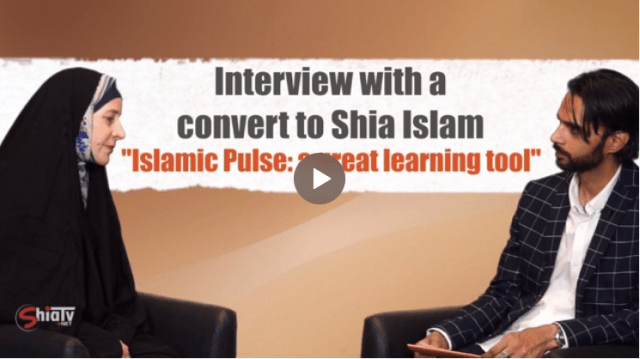
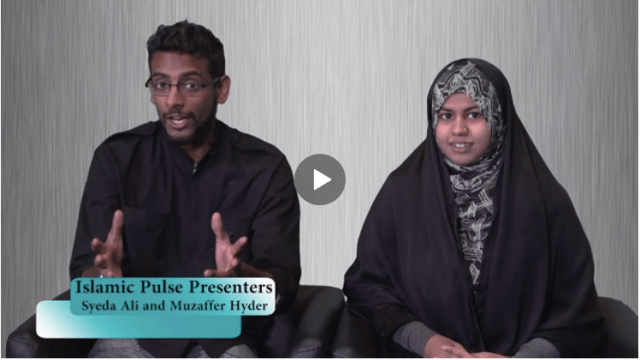
As I have been asked many times by both Muslim brothers and sisters and non-Muslims to share how/why I converted to Shia Islam, here is an approximate outline of how this came about. Both Islamic Pulse (IslamicPulseTv.com) in Qom and Masaf Institute (islampfr.com) in Tehran have published interviews with me on this process. This article is part autobiographical, part commentary on my feelings about Islam. I am not a scholar, so can write only from my limited viewpoint.

Born into a non-religious family of Shetland Scottish/Lithuanian background, I was never baptised, although as a young child I had already started to ponder life and death, quite typical for young children. I did always pray to God in my own private way. Living in India for half a year as a six year old opened my eyes to poverty, and also how we are all the same. Looking out of the window of the nice Mumbai hotel I stayed in with my parents to see a boy my age begging in the street is something I have never forgotten. Playing with the local children in rural Gujarat, where my father worked in a largely Sikh community, meant I never really understood what “the other” is supposed to be. We are all made of the same stuff. “The other” is just a fabricated fear to exclude large swathes of the world population!

After the government contract in rural India had expired, my parents moved to Germany, missing India, and not wanting to return to Scotland. I was 7, entered the local German primary school, and the stage was set for picking up language skills that would later lead to my career as a teacher. In Germany at primary school, I made good friends, was bilingual within less than a year, and also had that infamous comment hurled at me, “Go back to where you came from!” Most recently, I have had this comment directed at me on social media, typically by “secular” women who tell me to “go back to Iran” (which I promptly, and happily, do).

At 10, I started at the local Grammat School, and it was only then that my parents told me that I had never been baptised. To me that meant I was able to attend both Protestant and Catholic religious education classes at my school, which were part of the normal curriculum. I never “accepted” Christianity though, as I had serious issues with the concept of the Holy Trinity. My private prayers were still ongoing. After graduation from Grammar School, I attended university in the UK to study Philosophy and German. After the BA degree I embarked on a Master’s in Modern European Literature ( I had hoped to do postgrad studies in Philosophy, but lacked the courage (!) to pack my bags and make the move to Montreal, where I had been offered a place in Philosophy.

So I stayed put for the Master’s at the same university. During the Master’s degree, I developed a research interest in German speaking Jewish writers of Central Europe, Galicia, Bukowina, the regions of the “shtetl” which had been eradicated by the Nazis. This interest in part derived from my Lithuanian heritage and the suspicion that my maternal great grandmother may have been Jewish.

Although I was offered a fully funded PhD place, I “ran off” to London, to live in the “real world”, thinking that many postgraduate studies are too ephemeral to be of use for anyone. While studying in London, I met a Jewish boy, and even though his family was more secular than orthodox, I started going to synagogue and learning Hebrew. There was a kind of hiatus when I started teaching languages at high school in London, and I returned to saying only private prayers. After a move to Australia to teach (no more lack of courage to make big moves), three children, and the oldest at around 9 years of age starting to ask me about God and death, the more active research into my faith resumed. As I was not Christian, and my most recent experience had been of Judaism, I started going to synagogue with my oldest child. She attended the Hebrew classes for children, I attended the service in the synagogue.

I also started online studies, first enrolling in courses in statistics and data analysis, then brushing up my Spanish, taking a few courses in Mandarin, until one day, a course called “Constitutional Struggles in the Muslim World” caught my attention. While undertaking it, I started to develop an interest in Palestine and Iran in particular and was already carving out a research area for a possible PhD. Obviously, once I started the online courses, I also stopped watching TV, as I no longer had time. No more Western mainstream media. My academic/political interests were taking shape very fast, and I was near to writing the abstract for a PhD.

At  the same time, after 4 months of going to synagogue almost every Saturday, I was finding it uneasy to watch the scroll paraded around the synagogue and kept behind the curtain. The “pomp and circumstance” was difficult for me. During the festival of Sukkot, my daughter and I were sitting in a “tent” in a friend’s garden, and it was then I realised that to worship God I only needed myself and a prayer mat. So in a sense, I said my personal shahada to Allah while celebrating a Jewish festival. We stopped attending synagogue, but strangely enough, that afternoon in the tent had also given me the idea to start on social media, something I had not done so far. With my interests in Iran and Palestine, I was soon very engaged and with many Shia Muslim followers. My political and religious views seemed to merge. I did discuss my abstract for the PhD with uni professors and was close to establishing a supervisor, but I also realised that the occupation of Palestine would have prevented me from carrying out my research (scales of measurement of trust in farming cooperatives in Palestine and Iran, if you’re desperate to know, I obviously still had the “rural” thing going). The PhD was out the window, for the second time…

I decided to read a book on the life of the Prophet Muhammad, and that was it, basically. I realised that the Prophet had been the best of men, and that anything the West had tried to present about Islam was badly skewed. Much more reading followed, along with my political interest taking in the whole Muslim ummah (especially the West Asia region). I was fortunate to have excellent followers who recommended good scholars. I was already reading Tabatabai, Baqir Al-Sadr, Motahhari, Khomeini, Shariati, etc, along with a translation of the Qur’an.

I had also answered a call-out for a locally driven humanitarian campaign in Iraq (no foreign NGO’s for me…), and felt ready to start wearing hijab. Not really knowing when/if I would travel to the West Asia region soon, I rang the local mosque (one of the oldest in Australia, it had been Shia, but was now Sunni), and their Imam asked me to come in that afternoon. The Sunni Imam did wonder why I wanted to be Shia, but let me be, and heard my shahada. From that day on, I did not take off my hijab in public, or in front of non-mahram males. The volunteering in Iraq disappeared down a bureaucratic sinkhole, it seems, but instead a Shia sister in Perth, Australia, recommended a course in Qom to me, closing date was within a week. I was accepted, and then faced the long wait to have my visa approved.

In fact, the visa took so long that my course had finished, but with the visa in my passport, I travelled to Iran for the first time, immediately to Imam Reza Shrine, also the first time I prayed in public. When I had to leave the Shrine and the Imam, I did indeed cry all the way back to my hotel, hoping that Imam Reza would invite me back again. Now, I write this on my second “ziarat” visa to Iran, quite an extended stay this time, many more videos being recorded, also having written articles for the two Institutes. This time, I am “putting my life in order” to work only for Allah.

Everything in my life now relates to working for the pleasure of Allah and gaining nearness to Him. I have lost touch with old friends, some have chosen to ignore me, but I have gained in my new Muslim brothers and sisters some of the best people. People of humility, great kindness, highly educated, gentle and loving with their family and strangers. Political discussion is also always there. As Islam is also sent to us to liberate the oppressed people from the tyrants, Muslim believers can be some of the most politically committed people.

I certainly encourage people of other faiths to explore the teachings of Prophet Muhammad and his progeny, the Ahlul Bayt. I now read an abridged version in English of one of the great Tafsir’s on the Qur’an, Alama Tabatabai’s Al Mizan. Alongside I read the first Tafsir to be authored in English, the Ascendant Qur’an by Imam Muhammad Al-Asi. Islam is the most natural and complete faith, the faith I realise I have had since I was a child. It is also a faith of complete submission to God, which is the only way for man to control and purify his self, and to gain true happiness. With Islam comes a progressive lack of career ambition in the stereotypical way, it leads one to strive only to do good, honest work for the sake of Allah, whatever that may be. Western arrogance is also highly eroded by Islam, with humility being the cornerstone of this complete way of life. Allah also helps us to seek the company of fellow believers so that the purity of our inner being (which is what we are trying to develop) is not tainted or corrupted.

The male and female role models in Islam, ie. Prophet Muhammad, the twelve Shia Imams, and the Prophet’s daughter Fatima Zahra, as well as her daughter Zaynab, amongst others, are the most perfect role models for raising our children. No cult of celebrities that corrupts the children’s minds, no shallow emphasis on a person’s outer appearance, rather, the Prophet and his progeny exemplify the best human traits which we need to emulate.

I do describe Islam as the solution for mankind, it is the only system capable of liberating man from his petty whims and worries and educating him in self-sacrifice for the sake of Allah, which is also for the sake of mankind. When a majority of mankind has accepted Islam, Islam in its original teaching by the Prophet, not the corrupted Wahhabi version, then mankind will be well on the way to peace. As Muslims, we are in fact awaiting the return of Imam Mahdi, the Saviour, who will return with Prophet Jesus at his side, and will establish peace and justice in the world. Accepting Islam is a big step in a person’s life, and it might be a very bumpy ride, but all good work is also hard work, as it is only through the hard labour of polishing away our imperfections that we can get a glimpse of the pearl inside us.
 

Hijab, Far from the Body Image Dissatisfaction

Body image is defined as “one’s satisfaction with his or her body.” 15

In Westernised society, body image dissatisfaction, eating disorders and other psychological disorders as a result of being unhappy with oneself are rampant. Media and society promote a certain kind of image of the “ideal woman”. This article will examine the incidence of these disorders, the reasons for this body image dissatisfaction and the way in which hijab and living in an Islamic society provide some protection from this panacea. One major consideration is of course the absence of values education in the West that are tied to a religious/cultural tradition. “Values” in the West seem to be largely taught through glossy magazines and mainstream media these days!

Continue reading “Hijab, Far from the Body Image Dissatisfaction”

Heaven and Hell, Purgatory and Resurrection in Islam

Although some may wonder at the phrasing of the topic and consider that anything relating to death and what comes after it is of little importance to their current life, this topic is fundamental to understanding how to lead a good life, what qualities and actions are desirable, also what the impact is on our hereafter of our intentions, deeds and words in this life. Islam, being such a complete faith, of course guides us on the right path.

Continue reading “Heaven and Hell, Purgatory and Resurrection in Islam”

The Holy Prophet Muhammad (PBUH) and his Wives

This is an attempt to explain why the author of this article fell in love with the Prophet Muhammad and Islam.

Writing about the Holy Prophet (PBUH) of Islam is a gigantic undertaking.  I must confess that I am neither a scholar, nor have I studied Islam for a great many years, so every single statement I make comes with the limitation of one who has great love, but is still lacking in great subject knowledge, and indeed in correct expression at times.

Continue reading “The Holy Prophet Muhammad (PBUH) and his Wives”